
Key Takeaways
- The tax rate you pay on a Roth conversion depends on the year you convert, not just the amount, which means the same conversion can cost you very different amounts in taxes depending on the timing.
- Several specific conditions tend to make one year a stronger candidate for conversion over another: a low-income year, delayed Social Security, a down market, or room before your next bracket threshold.
- The One Big Beautiful Bill made tax brackets permanent under current law, but that doesn’t mean today’s historically low tax rates are guaranteed to stick around indefinitely.
If you’ve accumulated significant savings in a traditional IRA or 401(k), you’ve probably thought about converting some of it to a Roth. A lot of our clients at Intelliplan Financial have already decided that a conversion makes sense for them. But the question that also determines how much you pay in taxes is when you convert, and that’s where many people tend to benefit from guidance.
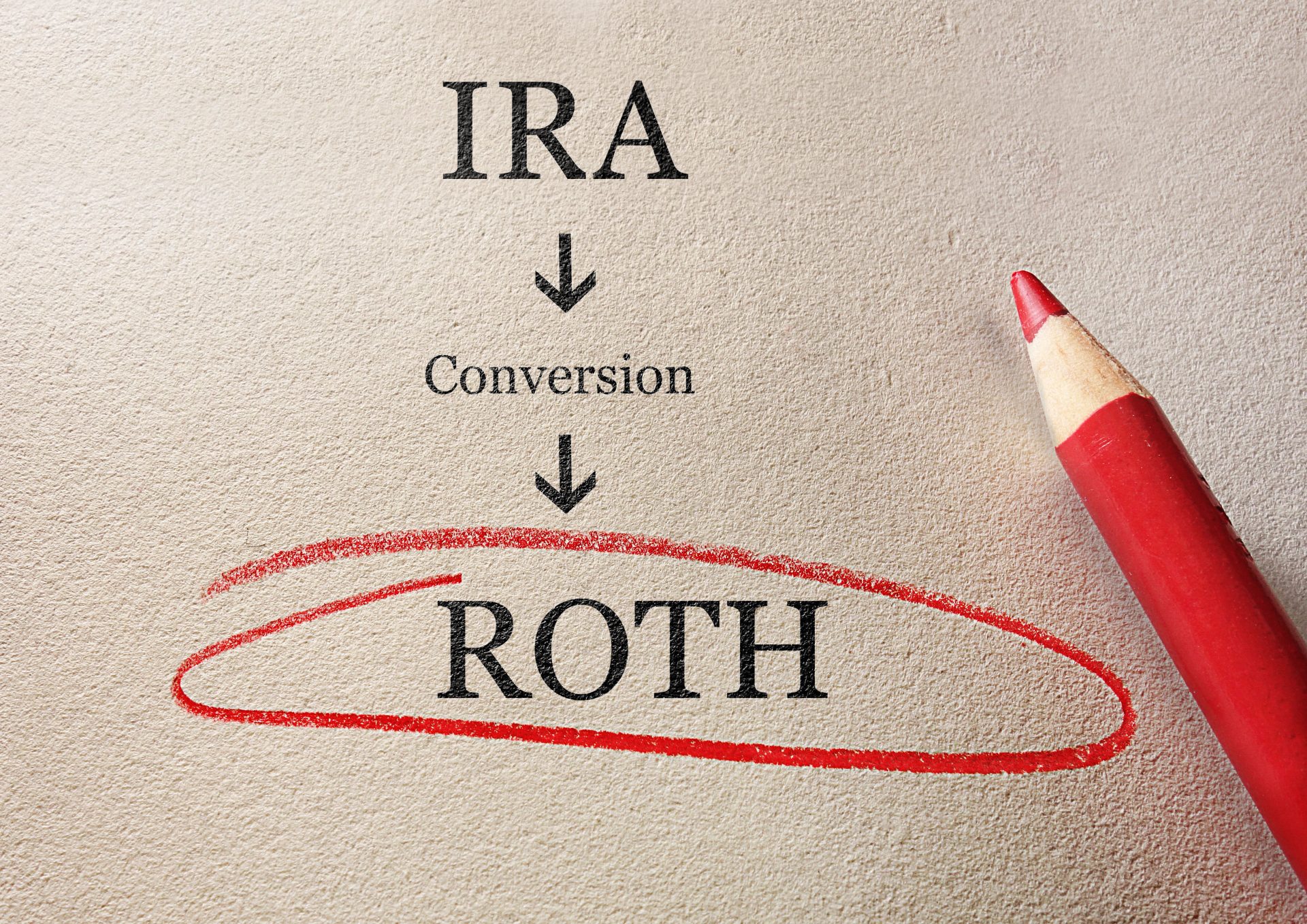
When to convert to a Roth IRA is rarely as straightforward as people expect. That’s what strategic Roth conversion timing comes down to: finding the years when converting will cost you the least and avoiding the ones when it could cost you the most.
What It Costs to Get the Timing Wrong
Three outcomes tend to come up regularly when timing gets overlooked, and these are exactly what a solid strategy is meant to help you avoid.
- Medicare premiums are based on income from two years prior, so a conversion that looks reasonable in isolation can still push you over a Medicare Income-Related Monthly Adjustment Amount (IRMAA) threshold, raising your premiums well after the fact.
- A similar surprise shows up with brackets: without a full look at your total income for the year, including Social Security, capital gains, or a spouse’s income, a modest-seeming conversion can bump you into a higher bracket than planned.
- Each conversion starts its own five-year holding period before those funds can come out without penalty, separate from your overall Roth timeline. Convert too close to when you plan to use the money, and it may not be there for you penalty-free when you need it.
In my experience, these outcomes are most likely to be avoided with a plan that takes your full year into account, not just the conversion itself. It’s also why Roth conversion timing is just one part of a holistic planning conversation at Intelliplan Financial.
When Timing Tends to Work in Your Favor
A handful of conditions tend to make one year a stronger candidate for converting than another. Here’s what to look for.
You’re in a lower-income year
The clearest signal is simply having a lower-income year than usual, whether that’s because you’ve stopped working but haven’t started Social Security, your business had a slow year, you cut back to part-time, or a large one-time deduction lowered what you’ll owe. Any of these can put you in a lower bracket than usual, which is often when converting costs the least. Not having started Social Security or required minimum distributions (RMDs) yet points the same way, though it won’t apply to everyone. If you claimed Social Security right at retirement or have steady pension income, that signal may not be yours, and one of the others below may matter more.
The market is temporarily down
Converting the same shares when values are lower means paying tax on a smaller dollar amount, and any recovery afterward happens inside the Roth, tax-free. We wouldn’t recommend converting for this reason alone, since a down market doesn’t change your bracket, but it can make a conversion you were already planning more efficient.
You expect a higher bracket in the future
If you expect to land in a higher bracket later, whether from RMDs, a pension, or a spouse’s income, converting now can still make sense even without an income dip.
You have room before your next bracket threshold
Regardless of what else applies, it’s worth checking your total income against where the next bracket begins, as there’s often more room to convert than expected.
These signals should be interpreted in context of your full income picture, ideally as part of a broader look at your retirement income plan, since your bracket, RMD timeline, and other income sources are all connected. If more than one of the above conditions holds true across several years, we often recommend converting smaller amounts spread across those years rather than making one large conversion. This approach, which we call a laddered conversion, can help you stay within a target bracket each year while still moving meaningful assets into tax-free growth over time. It’s one of the more common Roth conversion timing strategies we work through with pre-retirees who qualify for more than one favorable year.
Why Today’s Tax Environment Matters, Too
Beyond your own income picture, there’s a broader factor to keep in mind: today’s tax brackets are historically low. The One Big Beautiful Bill made the lower rates from the 2017 Tax Cuts and Jobs Act permanent, avoiding the higher rates previously scheduled once those cuts expired.
“Permanent” here means no scheduled expiration under current law, not a guarantee that rates will never change. A future Congress could still revise the tax code, which is one reason many families we work with see a conversion now, or over the next several years, as potentially costing less than waiting.
A Timing Mechanism Worth Knowing: Year-End vs. New Year
One more thing, separate from the conditions above, affects timing, and that’s time itself: which tax year the conversion lands in.
A conversion completed by December 31 counts as income for that tax year, but waiting until January 1 shifts it to the next year’s return instead. That timing difference can matter if you’re trying to stay under a bracket threshold, avoid an IRMAA surcharge, or coordinate the conversion with other income you’re expecting.
Next Steps: Time Your Conversion Right
If any of these conditions apply to you this year or over the next few years, a conversation with our team can help clarify whether and when a Roth conversion makes sense for your situation.
Schedule a complimentary 20-minute consultation to get started.
Not ready for a consultation yet?
Download our 10 Proactive Tax Strategies for Retirement guide free of charge to learn more about key tax strategies that may help protect your wealth and preserve your legacy heading into retirement.
Frequently Asked Questions about Roth Conversion Timing
When is the best time for a Roth conversion?
There’s no single best time for everyone we work with. A year tends to work in your favor when your income is lower than usual, you haven’t started taking Social Security or RMDs yet, the market is temporarily down, or you still have room before your next bracket threshold. If one or more of these conditions applies, that year may be a good one to consider a Roth conversion.
Should I convert before or after year-end?
It depends on your income picture this year versus next. A conversion completed by December 31 counts as income for this year’s return; waiting until January shifts it to next year’s. Comparing your expected bracket in each year can help you decide what timing works better.
Does the 5-year rule restart with each conversion?
Yes. Each conversion starts its own 5-year holding period before those specific funds can come out without penalty, so converting several times over several years means keeping track of more than one clock.
How does Roth conversion timing fit into my overall financial plan?
Roth conversion timing is one factor to weigh alongside your tax brackets, Social Security timing, Medicare premiums, and legacy goals, rather than a decision made on its own. Learn more about how we use The Tax Management Journey®, our approach to tax-efficient planning, to bring all of these pieces together.
Financial Planning and Advisory Services are offered through Prosperity Capital Advisors (“Prosperity”), an SEC-registered investment adviser. Registration as an investment adviser does not imply a certain level of skill or training. Intelliplan Financial and Prosperity are separate, non-affiliated entities. Prosperity does not provide tax or legal advice.
Related Posts


Financial Planning and Advisory Services are offered through Prosperity Capital Advisors (“PCA”), an SEC registered investment adviser. Registration as an investment adviser does not imply a certain level of skill or training. Intelliplan Financial and PCA are separate, non-affiliated entities. PCA does not provide tax or legal advice.